Before You React, Seek to Understand
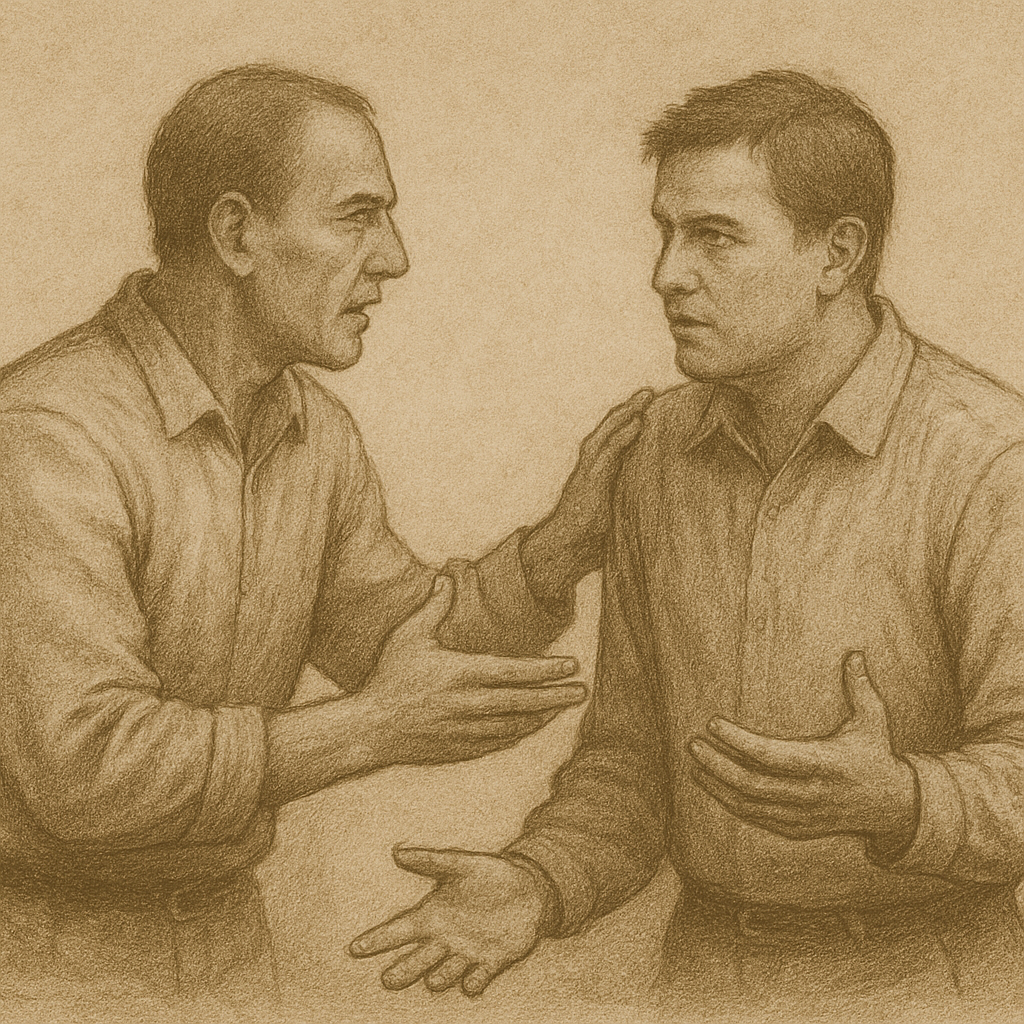
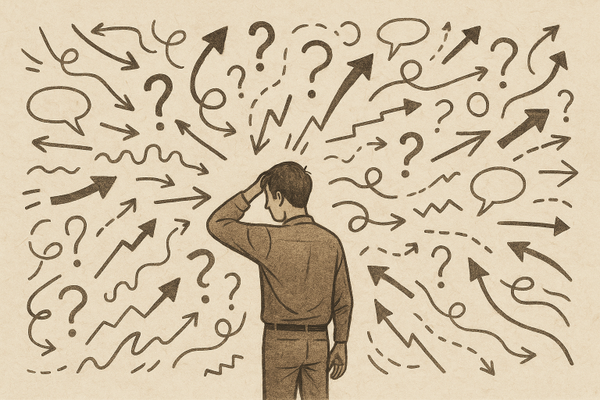
Many of the problems people run into in life result from misunderstanding. It is easier to guess what is going on in someone else’s head than it is to ask them and get to the reasoning behind their words or actions. Because it is easier to misunderstand than to understand, most people act on their assumptions rather than seeking clarity. This not only fails to solve the problem, it makes everyone involved worse off.
One time I was in a hurry to get home and waiting to turn left at a stoplight. The light was green, but we had to wait for the oncoming traffic to clear. Sometimes there is just enough space between cars to make the turn, so it helps to pull out into the middle of the intersection. The truck in front of me would not move forward into the intersection and it started to bother me. I’ve been stuck too many times because the person ahead refused to pull forward, so I began to get frustrated. I started mouthing off at the driver from inside my car, assuming he was inconsiderate or just clueless. But then the car in front of him turned left, and I realized there had been another vehicle in front of him the entire time. My frustration had nothing to do with the person I was angry at. I had completely misread the situation. I had not sought understanding and it had completely thrown off my emotions.
People act the way they do and say the things they say for a reason, and that reason is often not obvious. To get closer to the truth, we have to do more than react. We have to search. In that moment, I could have looked around the truck. I could have imagined the driver had been taught to wait behind the line. There were dozens of possible explanations, and I explored none of them. I assumed he was selfish, unaware, and a bad driver. That made sense to me. But what does that say about me?
Situations like this happen every day. Maybe a cashier does not smile like we expect. It would be easy to assume they have no sense of customer service. But what if they are going through something heavy? What if they are doing the best they can just to show up? Imagine what a small act of understanding might do for someone in that state. Imagine if instead of criticizing their lack of warmth, we offered ours. A simple thank you. A small word of encouragement. That single gesture might not only change their day, but ours. We do not know how much good we could do for others just by seeking to understand their world. And we do not know how much good we could do for ourselves and our well-being.
Next time someone cuts you off in traffic, ask what might have caused that instead of assuming they are reckless or entitled. Next time someone responds curtly in a text or doesn’t reply at all, ask what might be happening in their world instead of assuming they are cold or dismissive. The point is not to excuse poor behavior. The point is to start from a place of curiosity. A place that slows us down long enough to consider that our interpretation might be incomplete.
If we are wrong in something as small and simple as a traffic inconvenience, we are most likely wrong in more important areas as well, such as our relationships, our vocation, even our self-perception.
Are there any arguments you are currently having that may be driven by misunderstanding? What could you do to see the full picture? Are you quick to assume? Try this. Next time someone does something you dislike, think of two possible explanations that are not the first ones to come to mind. It could be life changing. The habit of assuming costs more than we realize. It shrinks our perspective, it feeds our pride, and over time, it makes us blind.