What Is Taoism? A Guide to History, Core Beliefs, and Effortless Living
Exhausted by constant overthinking and control? Discover the core beliefs, history, and practical wisdom of Taoism, and how effortless action (Wu Wei) can eliminate daily friction.

The Modern Struggle: Why Forcing Reality Exhausts Us
You set three alarms, color-code your calendar, and obsess over a five-year timeline. Yet beneath the relentless productivity sits a quiet, grinding exhaustion. Modern life conditions us to treat existence as an adversary to be conquered: if a project stalls, push harder; if a relationship feels strained, force an immediate resolution; if the future feels uncertain, double down on control.
When things fall apart, we assume the fault lies in our lack of effort. But what if the constant friction you feel isn’t proof that you aren't trying hard enough, what if it’s proof that you are fighting the natural mechanics of reality?
To ask what is taoism is not to embark on a tour of dusty historical artifacts. At its core, Taoism is a 2,500-year-old operating system designed to eliminate that friction.
Originating in ancient China, Taoism offers an alternative to the exhausting cycle of overthinking and hyper-control. It suggests that our deepest anxieties do not come from our circumstances, but from our habit of swimming upstream against currents we cannot change. Rather than asking you to master the universe, Taoism invites you to study how things actually work, and then move with them.
"The Tao that can be spoken of is not the eternal Tao; The name that can be named is not the eternal name." — Tao Te Ching, Chapter 1
The Modern Translation
The moment you freeze life into rigid labels, rigid plans, or rigid expectations, you lose touch with reality. Reality is dynamic, fluid, and constantly shifting. Words, metrics, and strategic plans are useful maps, but they are not the territory. When you cling to your static idea of how life "should" go, you generate internal friction against how life actually is.
At the center of this worldview is a single concept: the Tao (pronounced Dow), commonly translated as "The Way."
The Tao is not an anthropomorphic deity sitting on a cloud passing moral judgments, nor is it an airy, detached spiritual abstraction. Think of the Tao as an observable law of nature—like gravity, the change of seasons, or the path water carves down a mountain face. Water never argues with a boulder. It doesn't stress, panic, or attempt to smash through the stone by sheer willpower. It simply yields, finds the contour of the obstacle, and effortlessly flows around it, wearing the stone down over time through persistent, unforced momentum.
Understanding Taoism begins with a fundamental shift in posture: moving from a life of white-knuckled resistance to one of intelligent, effortless alignment.
Before we look at how to apply this state of flow to your daily work, stress, and relationships, we must clear up a common point of confusion: the difference between Taoism as a practical philosophy of the mind and Taoism as an organized religion.
The Great Distinction: Is Taoism a Philosophy or a Religion?
If you search for Taoism today, you will immediately encounter two wildly different worlds.
On one hand, you find minimalist books on mindfulness, water analogies, and timeless advice on letting go of control. On the other hand, you find incense-filled temples across East Asia, intricate colorful robes, complex rituals, and a pantheon of immortal deities.
This often leads newcomers to ask a simple question: Is Taoism a secular way of thinking, or is it a formal religion?
The short answer is both.
To understand Taoism without getting lost in cultural confusion, Chinese historians traditionally divide the tradition into two distinct yet overlapping streams: Daojia (the philosophical school) and Daojiao (the religious institution).
Philosophical Taoism (Daojia): An Operating System for the Mind
Daojia literally translates to the "School of the Tao." Rooted in the classic texts written between the 6th and 4th centuries BCE, this branch is not concerned with gods, worship, afterlife dogma, or holy scripture.
Instead, Daojia functions as an open-source mental framework for navigating daily life. Its central focus is practical:
- Observing how reality works rather than how we wish it would work.
- Conserving mental and physical energy by not forcing outcomes.
- Cultivating inner clarity through simplicity, self-awareness, and emotional non-attachment.
Because Philosophical Taoism requires no conversion, no belief in the supernatural, and no rejection of science, it is entirely agnostic. You can be a secular rationalist, an atheist, a practicing Christian, or a Buddhist and still apply the daily wisdom of Daojia to cure overthinking, navigate workplace conflict, or avoid burnout.
Religious Taoism (Daojiao): Ritual, Community, and Longevity
Around the 2nd century CE—roughly five hundred years after the first philosophical texts appeared—Taoism transformed during the late Han Dynasty. Faced with widespread plague, political collapse, and cultural upheaval, organized movements like the Way of the Celestial Masters emerged.
This became Daojiao—the "Religion of the Tao."
Daojiao took the foundational ideas of natural balance and applied them to human survival, community health, and metaphysical mystery:
- Priesthood and Sacred Space: It established formal temples, monastic orders, community festivals, and an ordained priesthood tasked with maintaining cosmic and community harmony.
- A Rich Pantheon: Practitioners revere a divine cosmic order, including the Three Pure Ones (primordial expressions of the Tao), the Jade Emperor, and historical figures who attained spiritual mastery (the Immortals).
- Longevity and Healing: Daojiao integrated traditional Chinese medicine, herbalism, breathwork (Qigong), and energetic alignment (Neidan, or internal alchemy) to preserve physical health and prolong life.
For millions of people throughout China, Taiwan, and the global diaspora, Religious Taoism is not an intellectual puzzle. It is a vibrant, living faith that marks births, honors ancestors, blesses communities, and preserves ancient healing arts.
• Philosophical Taoism (Daojia)
- Core Question: "How can I think and act in harmony with natural reality?"
- Key Tools: Self-inquiry, observation of nature, simplicity, and mental flexibility.
- Who It's For: Anyone seeking psychological resilience, low friction, and peace of mind without dogma.
• Religious Taoism (Daojiao)
- Core Question: "How can we honor the cosmic order, achieve vitality, and support our community?"
- Key Tools: Prayer, temple rituals, traditional medicine, lineage teachings, and energetic cultivation.
- Who It's For: Communities seeking an organized spiritual home, devotional practice, and cultural heritage.
Whether you approach Taoism as a secular philosophy for emotional balance or as a rich sacred tradition, both streams trace back to the same fountainhead: a chaotic period in human history that forced great thinkers to ask how we can live sanely in a world gone mad.
To trace those roots, we have to travel back to the chaos of the Warring States period and meet the two thinkers who started it all.
Historical Origins & Founding Thinkers: How Chaos Created Calm
To truly understand Taoism, you have to look at the world that forged it.
Between the 5th and 3rd centuries BCE, China was trapped in the brutal crucible of the Warring States period. The old imperial dynasty had splintered into competing fiefdoms locked in relentless civil war. Warlords drafted entire peasant populations into slaughter, political alliances shifted overnight, and everyday survival was fragile at best.
It was an era dominated by hyper-ambition, hyper-planning, and paranoia—not unlike the modern rat race turned up to an existential volume.
Naturally, brilliant minds stepped forward to offer a way out. The Legalists argued that human beings were fundamentally corrupt and could only be governed through harsh laws, surveillance, and state-sanctioned fear. The Confucians believed the crisis stemmed from broken manners and decayed traditions, proposing rigorous social rituals, strict hierarchies, and moral education to engineer harmony from the outside in.
The Taoists watched both factions build elaborate, rigid cages and shook their heads.
Their diagnosis was radically different: the world wasn't broken because people lacked rules, armies, or social etiquette. The world was broken because people were forcing too much. Humans had fabricated unnatural ambitions, rigid moral dogma, and endless demands, choking the natural flow of life.
Instead of adding another layer of control onto an already exhausted civilization, the early Taoists proposed a revolutionary counter-move: strip it all away.
Laozi and the Tao Te Ching: The Power of Softness
Tradition credits the birth of Taoism to a shadowy figure named Laozi (often spelled Lao Tzu), which simply translates to "Old Master."
Laozi worked as the royal archivist and librarian for the Zhou Dynasty court. He spent decades cataloging human history, observing political schemes rise and collapse, and watching ambitious rulers drive themselves and their people into the dirt. Legend holds that, weary of court intrigues and society's blind drive toward power, Laozi mounted a water ox and rode west toward the mountain wilderness to live out his days in peace.
At the western border pass of Hangu, a perceptive gatekeeper recognized the sage and refused to let him leave empty-handed. He asked Laozi to write down his life’s wisdom before disappearing into the mist.
Laozi paused, sat down, and penned roughly 5,000 Chinese characters—a concise, poetic work known today as the Tao Te Ching (or Dao De Jing, The Book of the Way and Its Virtue).
Arranged into 81 short chapters, the Tao Te Ching does not offer bulleted dogmas or rigid religious commandments. Instead, it teaches through paradox, poetry, and evocative natural metaphors:
- The Valley: The highest peaks are harsh, barren, and battered by winds. The low valley gathers water, nourishes life, and thrives. True strength lies in remaining low and open.
- The Empty Cup: A ceramic bowl is only useful because of the empty space inside it. Doors and windows only work because of the holes cut into the wall. Non-being and quiet space create real value.
- Water: Water is yielding, soft, and avoids confrontation—yet nothing on Earth can stop it from leveling a mountain over time.
"Nothing in the world is softer or weaker than water, yet nothing is better at overcoming the hard and strong, along the way nothing can change it."
— Tao Te Ching, Chapter 78
For leaders, Laozi’s advice was startling: govern lightly. The best leaders do not micro-manage or shout orders from gilded pedestals. They create the quiet conditions for people to thrive, so that when the work is accomplished, the people say, "We did it ourselves."
Zhuangzi: The Skeptic, the Satirist, and the Butterfly
If Laozi is the quiet grandfather whispering poetic truth from the mountain ridge, Zhuangzi (often spelled Chuang Tzu, 4th century BCE) is the sharp, witty conversationalist sitting across from you at a tavern, dismantling your ego with a smile.
Zhuangzi took Laozi’s naturalism and applied it to the human mind. He was deeply suspicious of anyone claiming absolute moral certainty or objective truth. To Zhuangzi, human beings spend their lives trapped in artificial distinctions: good vs. bad, success vs. failure, high status vs. low status. We exhaust ourselves fighting for trophies that have no value outside our own social illusions.
To demonstrate how fragile human certainty really is, Zhuangzi shared his most famous thought experiment: The Butterfly Dream.
The Butterfly Dream (Zhuangzi, Chapter 2)
One afternoon, Zhuangzi fell asleep and dreamed he was a butterfly—fluttering joyfully from petal to petal, entirely unaware that he was a man named Zhuangzi. Suddenly, he woke up, startled to find himself sitting on the floor in human flesh. He paused, smiled, and wondered: "Was I a man dreaming I was a butterfly? Or am I now a butterfly dreaming I am a man?"
The Takeaway for Modern Friction:
Zhuangzi wasn't being deliberately silly; he was attacking rigid dogmatism. We take our current anxieties, social metrics, and "urgent crises" with terrifying seriousness. The Butterfly Dream reminds us that human perception is always limited and provisional. Holding your views lightly and questioning your assumptions dissolves the unnecessary tension created by the desperate need to always be right.
Zhuangzi rejected court appointments and prestigious government titles, preferring to live modestly as an artisan and wanderer. When officials tried to recruit him into high-paying political office, he famously replied: "Would a sacred tortoise rather be dead and kept in an ancestral temple wrapped in silk, or alive and dragging its tail through the mud?"
He chose the mud every time.
Together, Laozi’s grounded naturalism and Zhuangzi’s radical perspective shifts laid the bedrock for a way of being that doesn't crack under pressure.
To translate this mindset into our own lives, we need to explore the specific mechanics of how it works. That brings us directly to the foundational principles of Taoist practice, starting with the elusive concept of effortless action.
The Core Principles of Taoist Living: 5 Mental Models for an Uncluttered Life
Strip away the historical commentary and temple incense, and the foundational taoism core beliefs function remarkably like an ancient cognitive toolkit.
These ideas were not designed to be memorized for theological tests. They were constructed as practical mental models to help ordinary people conserve psychic energy, make cleaner decisions, and stop warring with the fabric of everyday life.
Here are the five core pillars that define the Taoist approach to living without friction.
1. The Tao: Surrendering to the Underlying Current
The foundation of everything is the Tao—the natural, self-generating order of the universe.
You can think of the Tao as the universal law of least resistance. It is the physics behind why rivers carve paths around bedrock, why seedlings bend toward sunlight, and why trying to rush a fruit tree never produces an earlier harvest. The Tao is not a micromanaging deity demanding worship; it is the fundamental rhythm of reality.
Most of our psychological suffering happens when we pit our personal demands against this current:
- We demand that difficult people suddenly become easy.
- We demand that a project succeed before the foundation has been built.
- We demand that loss, grief, or uncertainty never touch our door.
Aligning with the Tao simply means starting with what is real. When you stop burning mental energy arguing with reality, you immediately recover the clarity needed to respond effectively to it.
2. Wu Wei: The Art of Effortless Action
Of all the concepts in Eastern thought, few are as widely misunderstood as Wu Wei (pronounced Ooh-Way). Literally translated as "non-doing" or "inaction," modern readers often mistake it for a spiritual excuse to quit their jobs, lay on the couch, and passively watch life pass by.
Nothing could be further from the truth.
When Taoists talk about Wu Wei, they are not endorsing laziness, apathy, or passivity.
• What Wu Wei is NOT: Sitting on the floor while your house burns down, ignoring deadlines, or refusing to take responsibility for your life.
• What Wu Wei IS: Action taken without friction, panic, or artificial forcing. It is the art of moving WITH the momentum of a situation rather than against it.
The Real-World Test: Think of the difference between rowing a boat directly against a gale force wind versus trimming your sails to catch that exact same wind. In both cases, the boat moves. But the rower exhausts themselves, bruises their hands, and risks capsizing, while the sailor harnesses the natural energy already present to travel twice as far with half the strain.
Wu Wei is not doing nothing; it is leaving nothing forced.
When you look at wu wei explained through modern psychology, it mirrors what researchers now call the flow state. It is the surgeon with thirty years of practice whose hands move with calm certainty, the athlete who reacts intuitively without overthinking the play, or the writer whose words spill effortlessly onto the page because they stopped trying to impress their inner critic.
Wu Wei asks a single diagnostic question when you hit an obstacle: Am I problem-solving, or am I brute-forcing?
3. Ziran: Naturalness, Spontaneity, and Unforced Authenticity
If Wu Wei is the way you act, Ziran (pronounced Zee-rahn) is the state from which you act.
Ziran translates roughly to "self-so," "of its own accord," or natural spontaneity. It is the quality possessed by a wild mountain stream or a blossoming apple tree: they do not consult manuals, practice personal branding, or agonize over how other trees perceive them. They simply exist in complete accordance with their intrinsic nature.
Human beings, by contrast, exhaust themselves maintaining elaborate facades:
- We say "yes" when every instinct in our gut screams "no."
- We pursue career paths designed to impress strangers at cocktail parties.
- We suppress our natural rhythms to fit into rigid, arbitrary corporate molds.
Cultivating Ziran means stripping away this artificial performance. It means learning to trust your internal compass, honoring your baseline limits, and developing the courage to be fundamentally yourself without theatrical apology.
4. Yin and Yang: Dynamic Balance Over Rigid Extremes
The iconic circular emblem of yin and yang (the Taijitu) has been stamped onto everything from coffee mugs to martial arts dojos. Yet its profound psychological value is often lost in pop-culture shorthand.
Unlike Western frameworks that pit absolute good against absolute evil in a permanent war to the death, Yin and Yang represent interdependent polarities. Light and shadow, inhale and exhale, expansion and contraction—you cannot have one without the other.
- Yang represents the active, bright, initiating, outward-facing energy.
- Yin represents the receptive, quiet, reflective, restorative energy.
| Mindset Model | Core Operating Belief | Real-World Impact |
| Perpetual Yang (Modern Hustle Culture) | "Hustle 24/7. Never stop producing. Sleep when you're dead." | Chronic anxiety, shallow creative output, adrenal burnout. |
| Dynamic Balance (Taoist Yin-Yang) | Action (Yang) must alternate with rest and recovery (Yin). | Sustainable stamina, emotional equilibrium, long-term clarity. |
Modern culture suffers from a chronic addiction to permanent Yang. We idolize constant production, endless growth, and relentless activity, treating rest, stillness, and patience as moral failures.
Global Footprint: How Many People Practice Taoism Today?
If you try to count Taoists the same way demographers count Catholics, Baptists, or Sunni Muslims, you will immediately run into a statistical wall.
In the Western tradition, religious belonging is largely exclusive and categorical: you hold a membership, profess a specific creed, and attend a designated house of worship. Checking "Christian" on a census form generally means you do not also check "Jewish" or "Muslim."
In East Asia, spiritual life has historically operated under an entirely different logic.
For centuries, Chinese culture has embraced the concept of Sanjiao, or the "Three Teachings harmonized into one." A single individual might comfortably consult a Taoist master for energetic healing, raise their children under Confucian ethical standards, and invite Buddhist monks to chant at a parent's funeral.
Because of this seamless syncretism, answering how many people practice taoism requires separating formal temple registration from the vast, lived reality of the tradition.
• Formal Religious Adherents: Estimated 12 to 20 million globally.
• Primary Geographic Centers: Taiwan, Mainland China, Hong Kong, Singapore, and Malaysia.
• Cultural Reach: Hundreds of millions throughout East and Southeast Asia who integrate Taoist cosmology, lunar holidays, and folk rituals without formal registration.
• Global Philosophical Footprint: Millions of secular practitioners worldwide utilizing Taoist frameworks for somatic movement (Tai Chi), mindfulness, medicine, and flow-state psychology.
Formal Adherents: The Bastions of Institutional Practice
When sociologists look strictly at ordained priests, registered temple associations, and individuals who formally identify their primary religion as Taoist, the global total sits between 12 and 20 million people.
- Taiwan: The undisputed center of living institutional Taoism. Because Taiwan did not experience the cultural disruptions of the mid-20th century, its temple traditions, lineages of Celestial Masters, and grand community festivals survived uninterrupted. Roughly 30% to 40% of Taiwan’s population actively registers with or regularly participates in Taoist temple life.
- Mainland China: Following decades of suppression during the mid-20th century, Taoism is experiencing a measured, steady revival. Today, it is one of China's five officially recognized religions, managed through the Chinese Taoist Association. Monastic centers on sacred peaks like Wudang Mountain, Mount Qingcheng, and Mount Hua have been restored as active centers of pilgrimage and martial training.
- The Southeast Asian Diaspora: Thriving Taoist communities exist across Malaysia, Singapore, and Indonesia, anchored by lineage associations founded by 19th- and 20th-century Chinese immigrants.
The Invisible Majority: Cultural and Folk Integration
Look past formal membership cards, and the true footprint of taoism today becomes exponentially larger.
Taoist philosophy and cosmology form the bedrock of East Asian folk religion. From the architecture of homes arranged according to Feng Shui (wind and water alignment) to traditional seasonal festivals like the Lantern Festival and the Ghost Festival, the daily life of hundreds of millions of people is steeped in Taoist DNA.
When people burn incense to honor ancestors, balance the "hot" (Yang) and "cold" (Yin) energies in their diet, or pray to local guardian deities for safety, they are enacting Taoist worldviews—even if they identify simply as "traditional" rather than specifically "Taoist."
Taoism does not demand exclusive loyalty because it sees itself as a description of how the universe already functions, not a private club with a velvet rope.
The Global Influence of Taoism: The Quiet Western Shift
Outside of Asia, the global influence of taoism has followed an entirely secular, practical trajectory.
Rather than adopting Chinese temple rituals or venerating Taoist immortals, the modern West has drawn heavily from Taoism's philosophical and physiological frameworks to soothe the strains of industrial life:
- Somatic Movement & Longevity: Disciplines like Tai Chi and Qigong—originally developed as moving meditations to circulate internal vital energy (Qi)—are practiced by millions globally to reduce stress, improve joint mobility, and regulate the nervous system.
- Integrative Health: Traditional Chinese Medicine (TCM), acupuncture, and herbalism base their diagnostic models on restoring the dynamic equilibrium of Yin and Yang within the body.
- Flow-State Psychology: High-performance athletes, creative professionals, and entrepreneurs increasingly turn to the mechanics of Wu Wei as the historical blueprint for what modern psychology calls "flow"—the state of peak, effortless concentration.
- Deep Ecology & Environmentalism: Taoism's insistence that humans are not the masters of nature, but merely an organic part of it (Ziran), has made it a foundational philosophical text for modern conservationists and ecological thinkers.
Taoism has survived 2,500 years precisely because it does not rely on rigid dogmatic structures that crumble when cultures change.
However, to understand how unique this worldview truly is, it helps to place it side by side with the other major systems human beings have used to make sense of the world. That brings us to our comparative breakdown: how Taoism stacks up against Confucianism, Buddhism, Western Monotheism, and Stoicism.
Comparative Analysis: How Taoism Compares to Eastern and Western Worldviews
No philosophy exists in a vacuum. Ideas sharpen when they collide with competing ways of seeing the world.
Throughout history, human beings have designed vastly different navigational maps to answer the same fundamental questions: Why do we suffer? How should we act? What is our place in the universe?
By looking at taoism vs confucianism, taoism vs buddhism, taoism vs stoicism, and Western monotheism side by side, we can see where these traditions overlap—and pinpoint the exact psychological niche where Taoist wisdom shines best.
1. Taoism vs. Confucianism: Spontaneous Nature vs. Engineered Social Order
If you lived in ancient China during the Warring States period, your intellectual choice was largely between two competing diagnoses for a collapsing society: the classroom of Confucius or the wilderness of Laozi.
Confucianism is an architecture of social engineering. Confucius believed that human beings are raw clay that must be molded through formal education, rigid etiquette (Li), filial piety, and civic duty. To a Confucian, peace requires clear hierarchies: ruler to subject, father to son, elder to younger. You fix the world by mastering your assigned social role and serving the state.
The early Taoists viewed this approach with deep skepticism. To Laozi and Zhuangzi, the Confucian obsession with manners, titles, and public rituals was not the cure—it was the disease. They argued that the moment you have to invent elaborate rules for "goodness," it proves you have already lost genuine, spontaneous virtue (Ziran).
Where Confucianism seeks to build an orderly civic garden with manicured hedges and precise boundaries, Taoism reminds us that the wilderness survives without human interference.
For centuries, Chinese culture synthesized these two impulses into a famous cultural maxim: "Be a Confucian on the outside, and a Taoist on the inside." Play your necessary public roles with integrity, but preserve your internal freedom, simplicity, and calm behind the scenes.
2. Taoism vs. Buddhism: World-Affirming Flow vs. Transcending Suffering
When Indian Buddhist missionaries traveled along the Silk Road into China around the 1st century CE, they brought a radically foreign worldview.
At the heart of the taoism vs buddhism distinction is their starting premise regarding physical existence:
- Buddhism begins with the diagnosis of Dukkha (suffering, unsatisfactoriness) driven by clinging and craving. Its ultimate trajectory is liberation (Nirvana)—escaping the endless cycle of death and rebirth (Samsara) by extinguishing ego-attachment. It treats worldly existence as an illusion to be transcended.
- Taoism, by contrast, is thoroughly world-affirming. The physical cosmos and the human body are not traps to escape; they are direct, sacred manifestations of the Tao. The Taoist does not wish to exit the world, but to inhabit it with total natural harmony, vitality, and longevity.
Despite these differences, the two traditions did not destroy one another. Instead, they had one of the most fruitful cross-pollinations in intellectual history.
When Indian Buddhism met the grounded naturalism, paradox, and anti-intellectual humor of Taoism, the result was Chan Buddhism—which later migrated to Japan and became known globally as Zen. When a modern Zen master tells a student to "chop wood, carry water" or meditate on an unanswerable riddle (Koan), they are speaking with a distinctly Taoist accent.
3. Taoism vs. Western Monotheism: An Impersonal Current vs. A Personal Creator
For readers raised in Western cultures shaped by Judaism, Christianity, or Islam, Taoism requires setting aside nearly every familiar metaphysical category:
- No Personal God: The Abrahamic God is a conscious, supreme Being—a personal Creator, Lawgiver, and Judge who communicates through prophets, commands moral obedience, and rewards or punishes human actions. The Tao has no ego, no personality, and issues no commandments. It is an impersonal cosmological current. The Tao Te Ching explicitly notes that the Tao "does not act as a master" and treats all things with equal impartiality.
- Non-Duality vs. Cosmic War: Traditional Western theology operates within a sharp dualism: a dramatic battle between absolute Good (God, light, salvation) and absolute Evil (Satan, darkness, sin). Taoism operates on the principle of dynamic polarity (Yin and Yang). Light and dark, birth and death, expansion and contraction are not mortal enemies fighting for total annihilation; they are interdependent rhythms that require each other to sustain reality.
In monotheism, spiritual alignment means obeying the will of a divine Father; in Taoism, alignment means observing the natural laws of reality and stopping your useless resistance against them.
4. Taoism vs. Stoicism: Yielding Water vs. Disciplined Iron
Over the past decade, ancient Roman Stoicism has surged in popularity among professionals, entrepreneurs, and seekers looking for mental resilience. At first glance, the parallels between taoism vs stoicism are striking.
Both philosophies center their practical advice on the exact same psychological foundation: the dichotomy of control. Both Laozi and Epictetus urge you to stop tormenting yourself over external events you cannot dictate, focusing instead on your internal response.
The critical divergence lies in their mechanics and posture:
- The Stoic uses the will and the intellect. Stoicism treats the mind as an internal citadel. You train yourself through rigorous cognitive discipline, rational self-examination, and duty to master unruly passions. A Stoic endures hardship like an iron shield—firm, unyielding, and fortified against emotional collapse.
- The Taoist uses softness and yielding. Taoism views hyper-rationality and rigid mental fortress-building as just another subtle form of tension. Rather than bracing against the storm with clenched teeth, the Taoist bends like green bamboo before snapping back, or yields like water around a stone.
The Stoic asks: "How can I steel my mind to endure this trial with dignity?"
The Taoist asks: "Where am I creating friction, and how can I step out of the way of the collision?"
The Traditions at a Glance
| Tradition | Core Focus | View of Action & Effort | Ultimate Goal |
| Taoism | Natural alignment & spontaneity (Ziran) | Wu Wei: Yielding, non-forcing, moving with natural momentum | Effortless living, physical vitality, inner peace |
| Confucianism | Social harmony, civic order & ritual (Li) | Cultivated Duty: Deliberate effort, self-discipline, moral study | An ethical, harmonious, and stable civilization |
| Buddhism | Liberation from craving & suffering (Dukkha) | Mindful Insight: Meditation, ethical conduct, relinquishing ego | Awakening (Bodhi), freedom from rebirth (Nirvana) |
| Western Monotheism | Righteousness & relationship with God | Moral Obedience: Prayer, following divine commandments | Salvation, redemption, eternal communion with the Divine |
| Stoicism | Rational virtue, duty & emotional mastery | Cognitive Will: Active discipline, enduring external trials | Tranquility (Ataraxia), moral character, resilience |
• Choose Stoicism when: You are facing a crisis requiring strict personal accountability, intense mental focus, or the raw grit to endure circumstances outside your control.
• Choose Confucianism when: You are organizing a team, building a community, or need structured routines, manners, and clear expectations to make relationships function.
• Choose Buddhism when: You are untangling deep existential anxiety, confronting grief, or need to see through the toxic attachments of your own ego.
• Choose Taoism when: You are burned out, overthinking every decision, trying to control people who won't be controlled, and white-knuckling your way through life.
When life feels like a high-friction battle against a raging river, put down the oars and embrace the Tao.
Now that we have mapped the philosophy and seen how it contrasts with other traditions, only one question remains: How do you actually practice this on an average Tuesday?
That brings us to our final section: a clear, practical guide to applying effortless action when modern life starts to overwhelm you.
Conclusion: The Art of Living in Flow
You do not need to book a one-way ticket to a remote temple in the Wudang Mountains, throw away your smartphone, or abandon your ambitions to practice Taoism.
Taoism was never intended as an escape hatch from reality. It was designed as an operating manual for engaging with reality as it actually is.
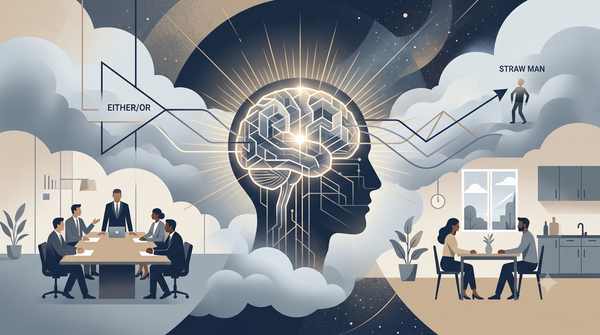
The core mistake modern culture makes is assuming that strength always looks like aggression, that progress always requires frantic exertion, and that control is the only defense against uncertainty. When we operate under these assumptions, we trap ourselves in cognitive dead-ends. We fall victim to binary thinking and false dilemmas—distortions we dissect in our breakdown of the common Types of Logical Fallacies—believing our only options are total dominance or total defeat.
The Taoist tradition offers a radically different exit. It reminds us that reality is dynamic, fluid, and far too expansive to be permanently boxed in by human categories—a core paradox at the heart of our broader exploration into the nature of Absolute Truth.
Mastery does not come from forcing the world to bend to your schedule. It comes from stripping away the friction of ego, reading the terrain in front of you, and knowing when to push, when to pause, and when to yield.
To help you translate this ancient mindset into ordinary moments of daily friction, use this practical framework whenever you feel tension, overwhelm, or panic taking over.
The Daily Practice: A Framework for Non-Resistance
Whenever you feel your stress spiking, your jaw clenching, or an impulse to force a resolution, pause and run through these three diagnostic steps:
1. Check for Unnecessary Force
Ask: "Where am I rowing upstream or fighting the current right now?"
- Identify the exact point where your ego has entered the room. Are you trying to force someone to understand your perspective? Are you demanding certainty from a situation that simply needs time? Notice where you are white-knuckling, and deliberately release the grip.
2. Wait for the Mud to Settle
Ask: "Am I reacting from clarity, or reacting from agitated water?"
- In Chapter 15 of the Tao Te Ching, Laozi asks: "Who can make muddy water clear? Let it be still, and it will gradually become clear." When hit with unexpected chaos or an emotional trigger, do not immediately fire off an email or force a countermove. Step away. Give the sediment of your mind time to settle to the bottom before deciding what to do next.
3. Take the Path of Water
Ask: "What would yielding look like in this specific moment?"
- Water never breaks itself against a boulder; it finds the path of least resistance around it. Yielding is not submission; it is tactical flexibility. Can you de-escalate the conflict? Can you adapt your plan to the new bottleneck instead of slamming your head against the wall? Find the open contour and move there.
At its core, the search for truth is not an intellectual conquest. It is not about accumulating enough facts, arguments, or leverage to overpower the universe.
Truth, like the Tao, is something you participate in. It asks you to lay down the exhausting illusion that you must run the entire cosmos from your desk, step out of your own way, and learn to stand peacefully inside the current of your life.
Frequently Asked Questions About Taoism
1. Is Yin-Yang strictly a Taoist concept?
No, Yin-Yang predates Taoism, originating in ancient Chinese cosmology and the I Ching (Book of Changes). Taoism later adopted and refined it into its central philosophy of non-duality and dynamic balance.
Long before Laozi composed the Tao Te Ching, early Chinese observers used Yin and Yang to describe the natural rhythm of the physical world—specifically the shady (Yin) and sunny (Yang) sides of a mountain. Over centuries, this concept influenced virtually every facet of East Asian thought, including Confucian social duty and Traditional Chinese Medicine (TCM).
However, Taoism gave Yin-Yang its deepest metaphysical home. Rather than treating light and dark as opposing forces locked in a moral war, Taoism framed them as complementary, mutually arising polarities. You cannot exhale without inhaling, and you cannot have clarity without stillness.
2. Do Taoists believe in God?
Philosophical Taoism does not believe in a personal Creator God, viewing the Tao as an impersonal, self-generating natural principle. However, religious Taoism reveres an extensive pantheon of deities, spirits, and historical immortals.
• The Tao is not a "Who": Unlike the Abrahamic God, the Tao has no ego, issues no moral commandments, and does not pass judgment. It functions like an organic source code or law of physics.
• The Religious Pantheon: In Daojiao (religious Taoism), temples honor cosmic emanations of the Tao (such as the Three Pure Ones), guardian spirits, and ancestors who attained spiritual mastery.
In short, if you define "God" as an all-powerful celestial ruler who demands exclusive worship, Taoism does not share that concept. If you define the divine as an all-pervading, mysterious source from which all living things arise and return, the Tao fills that role entirely.
3. Can you practice Taoism alongside another religion?
Yes, you can practice Taoism alongside other faiths. Because philosophical Taoism requires no conversion oaths, creeds, or exclusive dogmas, its principles of humility and non-resistance can complement traditions like Christianity, Judaism, Buddhism, or secular humanism.
Historically, East Asia has celebrated this integrative approach through the concept of San Jiao, or the "Three Teachings Harmonious as One." For generations, individuals comfortably practiced Confucian ethics in their public duties, observed Buddhist meditation for understanding the mind, and applied Taoist naturalism to protect their personal health and peace.
Because philosophical Taoism is primarily an operating system for how you engage with reality, an everyday reader can easily apply its stress-reducing mental models without compromising their personal theological commitments.
4. Does Wu Wei mean doing nothing or being passive?
No, Wu Wei does not mean passivity, fatalism, or laziness. It translates to "effortless action" or "non-forcing"—the practice of acting without internal friction and moving with the natural momentum of a situation rather than forcing outcomes.
A common misunderstanding is assuming that a Taoist merely watches life pass by from the sidelines. In practice, Wu Wei looks like elite competence. It is the seasoned sailor who trims their canvas to catch a gale rather than exhausting themselves rowing directly against it, or the artisan who lets the natural grain of the wood dictate the shape of the cut.
When you practice Wu Wei, you still take action—often decisive, powerful action. You simply eliminate the frantic anxiety, ego-driven posturing, and unnecessary resistance that turn ordinary challenges into exhausting battles.
5. What is the primary holy book of Taoism?
The foundational text of Taoism is the Tao Te Ching (Dao De Jing), attributed to the sage Laozi, followed closely by the witty, allegorical parables found in the Zhuangzi.
Written in roughly 5,000 ancient Chinese characters across 81 brief poetic chapters, the Tao Te Ching remains one of the most widely translated and reprinted works in global literary history. Rather than presenting a dogmatic rulebook, it relies on evocative imagery—flowing water, uncarved wood, empty valleys—to nudge the reader toward self-reflection and simplicity.
In religious Taoism (Daojiao), the literary canon expands significantly into the Daozang, a vast collection of over 1,400 sacred texts preserving centuries of temple liturgies, herbal medicine treatises, meditative visualizations, and alchemical recipes.
6. What is the ultimate goal of a Taoist?
The ultimate goal of a Taoist is to live in total alignment with the Tao, cultivating mental peace, physical vitality, unforced spontaneity, and freedom from artificial societal friction.
Unlike religious traditions that focus entirely on reaching an external heaven or escaping the physical world altogether, Taoism is profoundly world-affirming. The goal is not to leave the earth behind, but to inhabit your everyday human life with effortless grace and grounded balance.
By unlearning the habit of over-controlling the future, honoring your natural limits, and meeting obstacles with the soft persistence of water, you realize that the peace you have been frantically searching for has been present beneath the noise all along.